
Home
Deck Building Deck Repair Composite Decking Deck Staining Covered Decks Screened Porches
About FAQ Contact Call (470) 888-6871
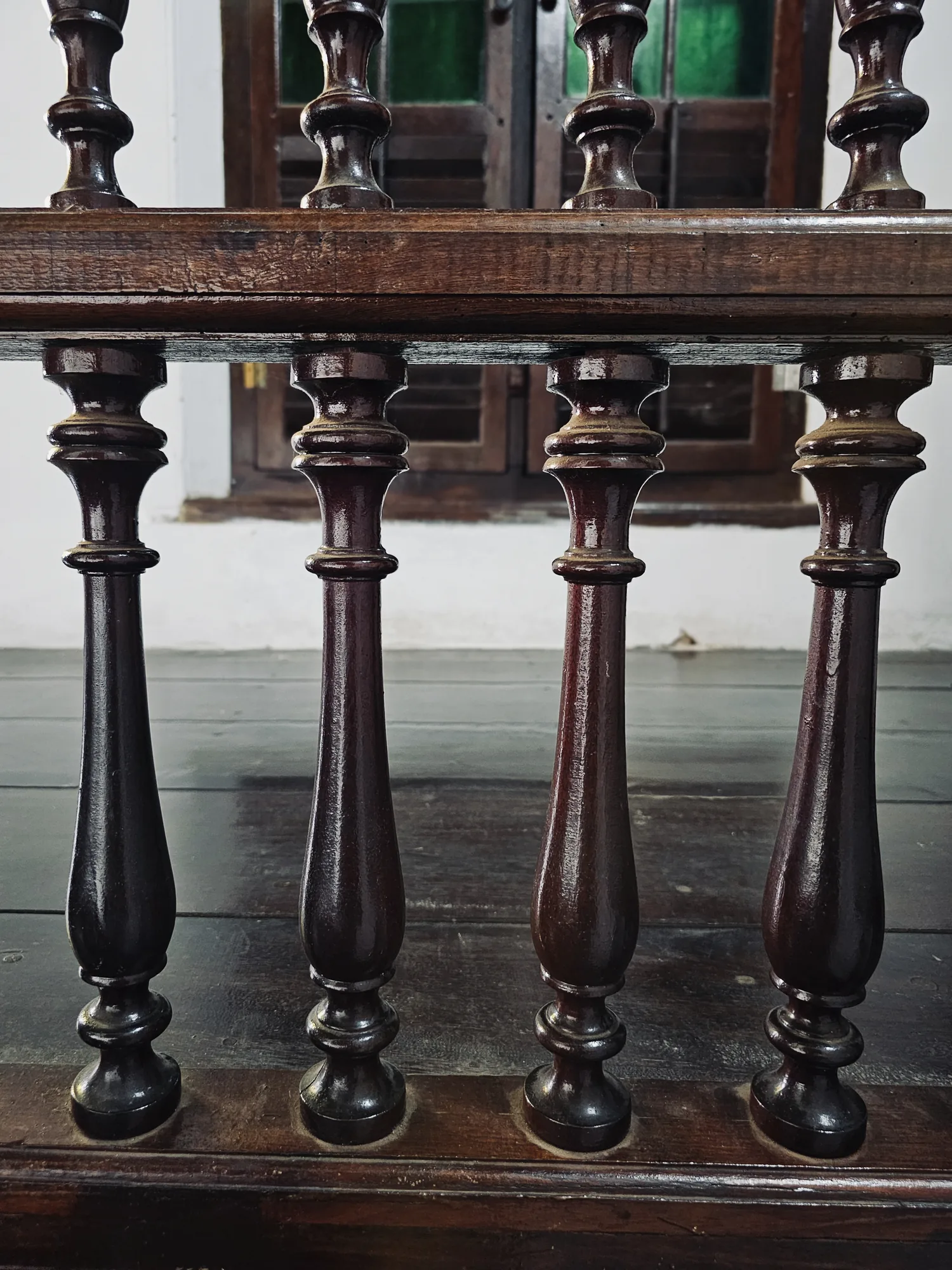
Turned wooden balusters in a railing

Deck Questions, Answered

Permits, pier depth, guard and stair rules, cost ranges, and materials, answered for South Fulton and the towns around it.

WHAT THESE ANSWERS ARE BASED ON

City documents

The City of South Fulton deck handout and permit pages.

State code

The current Georgia residential code as adopted statewide.

Georgia statute

Licensing, warranty, and cancellation law as written.

Trade standards

Published fastener, treatment, and decking specifications.

Service Area

Deck Work Across South Fulton and Nearby

We cover all 92 square miles of South Fulton plus the towns around it, out to Palmetto and Chattahoochee Hills on one side, Riverdale and Fayetteville on the other. If your mail still says Atlanta, Fairburn, or Union City, you are almost certainly inside our area. No travel charge inside that ring.

South Fulton Fairburn Union City East Point College Park Palmetto Chattahoochee Hills Hapeville Riverdale Douglasville Fayetteville Tyrone Newnan Peachtree City Jonesboro Forest Park Lithia Springs Atlanta
Questions

Everything homeowners ask us about decks

Permits and Inspections

New decks and replacements need one, and some repairs do too. The city's deck handout is explicit that you should call the permit department to check whether a given repair requires a permit rather than guessing. Applications are filed electronically through the city's SagesGov portal.
Proof of ownership, a signed lease, or notarized owner authorization. A new deck also needs a site plan approved by the Planning Department before the permit can issue. A contractor brings a copy of their state license, which is why the counter asks for it.
The city allows a homeowner to build a deck on a dwelling they occupy, provided the home is not for sale or lease. That is the city's own wording. It does not remove the permit, the inspections, or the code requirements.
By email to the city's inspection request address, with the property address, the permit number, the inspection type, and a contact number. The permit card has to stay posted on site while the work runs.
Three checkpoints. Footings, once the piers are dug and before any concrete goes in. Framing, and then final, once construction is complete. The footing inspection is the one people try to skip, and it is the one that matters most.
Not inside the city. Planning, zoning, and permitting for this area transferred to the City of South Fulton in 2017, and state law later allowed the last unincorporated piece to be annexed. Deck permits here are city permits, full stop.

Code and Construction

The current Georgia residential code, which the state adopts and updates on its own cycle, plus what the City of South Fulton enforces at plan review. If you are comparing bids and one quotes an older code edition by number, ask them to check.
Twelve inches minimum into undisturbed soil, bearing on firm soil, per the city's deck handout. Fill does not qualify unless a Georgia registered engineer designs for it. Deep enough matters more here for clay movement and bearing than for frost.
The board bolted to your house that carries about half the deck's weight into the building. It is the single most critical connection on a deck. Code sets a 2x8 minimum, bars mounting it to stone or masonry veneer, and requires corrosion-resistant flashing so water cannot reach the band joist behind it.
Guards are a minimum of 36 inches above the walking surface, and the openings cannot pass a 4-inch sphere, which works out to under about 3-7/8 inches between balusters. A guard also has to resist a 200-pound load pushed horizontally anywhere along the top rail.
Risers max out at 7-3/4 inches, treads run at least 10 inches, and the tallest and shortest riser in one flight cannot differ by more than 3/8 inch. Stairs need at least 36 inches of clear width, and a handrail once there are four or more risers.
Because modern copper-based treated lumber is roughly twice as corrosive to steel as the old CCA was. Fasteners want hot-dip galvanized or stainless, connectors want hot-dip galvanized sheet, and the two have to be the same metal family or galvanic corrosion goes to work on the connection.

Cost and Timing

Pressure-treated typically lands around $25 to $45 per square foot installed in the Atlanta metro, capped composite around $35 to $60. Those are ranges, not quotes. Height, stairs, railing footage, shape, and access swing a real price well inside and outside them.
Usually because they are not the same deck. Railing system, stair count, footing work, decking tier, and whether the crew is pulling a permit all move real money. Ask each bidder what pier depth they are digging and what the ledger detail is.
Cleaning and refinishing typically runs about $3 to $6 per square foot in the Atlanta market, depending on how much stripping the old finish needs. A deck that has been left to peel costs more than one caught on schedule.
Framing runs essentially year round here, with a short slowdown in the coldest weeks. Refinishing is fussier, because the wood has to be dry and the temperature moderate. Spring pollen and summer afternoon storms are the two things that actually shuffle a schedule.
Georgia has no general cancellation right for home improvement work. The three-business-day cooling off period applies to home solicitation sales, meaning a contract signed somewhere other than the seller's regular place of business after a door-to-door approach. Do not assume it covers a deck contract you signed at a showroom.

Materials and Upkeep

Pressure-treated costs the least to install and the most to maintain, because the appearance needs a recleaning and refinishing cycle. Capped composite costs more up front and drops the stain-and-seal cycle entirely. The crossover depends mostly on how long you plan to stay in the house.
Ask whether it carries an ICC-ES evaluation report. Composite and plastic decking gets code recognition through a standard called ASTM D7032, and those evaluation reports are what let a building official approve a brand. It is a checkable quality signal that will not appear on a brochure.
Go by moisture, not the calendar. The target is roughly 15 percent moisture content or lower. The field test is to sprinkle water on a board: if it beads, the wood is still too wet or too glazed to take finish, and if it soaks in within about ten minutes it is ready.
It is probably CCA-treated, since residential CCA production ended at the close of 2003. The EPA does not require removing existing CCA structures and notes that a regular penetrating stain may reduce leaching. What it does change is demolition: no sanding clouds, and never a burn pile.
A self-adhering membrane run along the tops of joists, beams, and the ledger. It sheds the water that otherwise sits in the joist-to-board seam and it seals around every screw penetration, which is exactly where rot starts. It costs a small fraction of the job and protects the expensive half of the deck.

Ready to Talk About Your Deck?

Send the address and a photo, or call and we will set a walkthrough. You get one written price, the permit handled, and a start date you can plan around.

(470) 888-6871
Mon to Sat, 7am to 6pm
Call Now
Call (470) 888-6871